
Safety Netting Solutions for Sports Facilities: What Buyers Should Know
Sports facility safety netting plays a crucial role in preventing accidents, ensuring both player and spectator safety.[^1] Unlike training nets, these nets are purpose-built for barrier protection—stopping balls or people from crossing boundaries. If you’re evaluating safety netting solutions, understanding their application, technical standards, and installation system is key to making informed decisions.
Sports facility safety netting serves to prevent injuries from errant balls or players crossing boundaries by absorbing impact forces. It's distinct from training nets, which are not designed for this level of durability, and mixing them can result in safety failures. Buyers should choose nets tested for breaking load strength and certified to relevant industry standards.[^2]
Careful evaluation prevents costly mistakes, safety hazards, and liability risks. Let's explore what makes sports facility netting unique, and why rigorous standards, proper installation systems, and supplier certifications are non-negotiable.
What key applications do sports facility safety nets have?
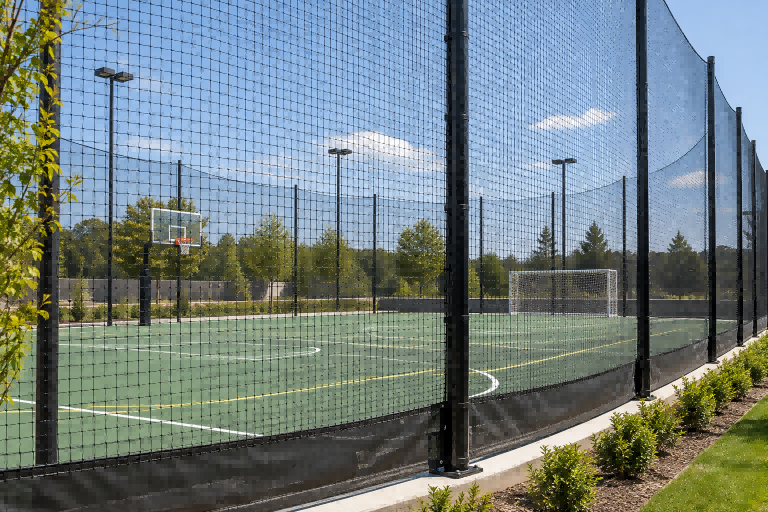
Common applications include baseball backstop nets, golf driving range barriers, soccer field boundary nets, and school playground enclosures. These installations require higher impact tolerance compared to regular training nets.
Safety netting is critical especially in high-risk sports like baseball and golf where balls travel at extreme speeds. For example:
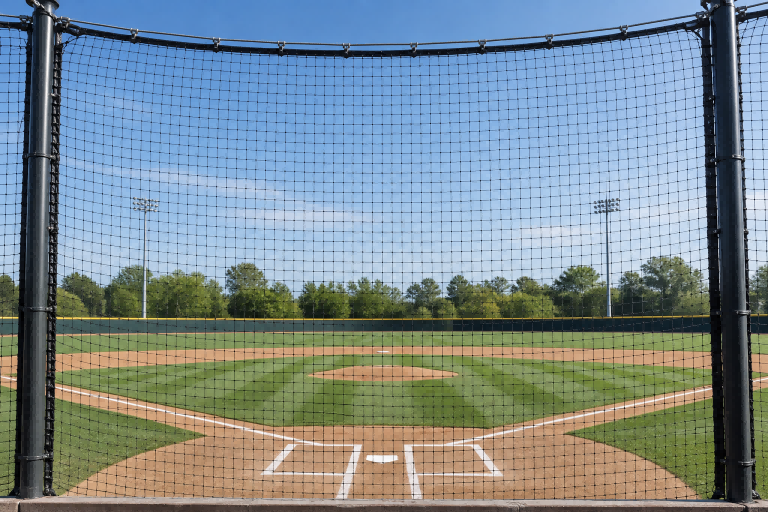
- Baseball Backstop Nets: Designed to absorb repeated impacts from balls traveling up to 160 km/h.
- Golf Driving Range Barriers: Massive coverage (20–30 meters high, 150–300 meters long) prevents balls from exiting the facility perimeter.
- Soccer/Rugby Field Protection: Keeps errant shots within stadiums or training complexes.
- Playground Safety Nets: Guards against children or sports equipment leaving play zones unexpectedly.
Training nets cannot be used interchangeably, as their lower breaking load strength fails to meet safety demands.
What technical standards define safety net quality?
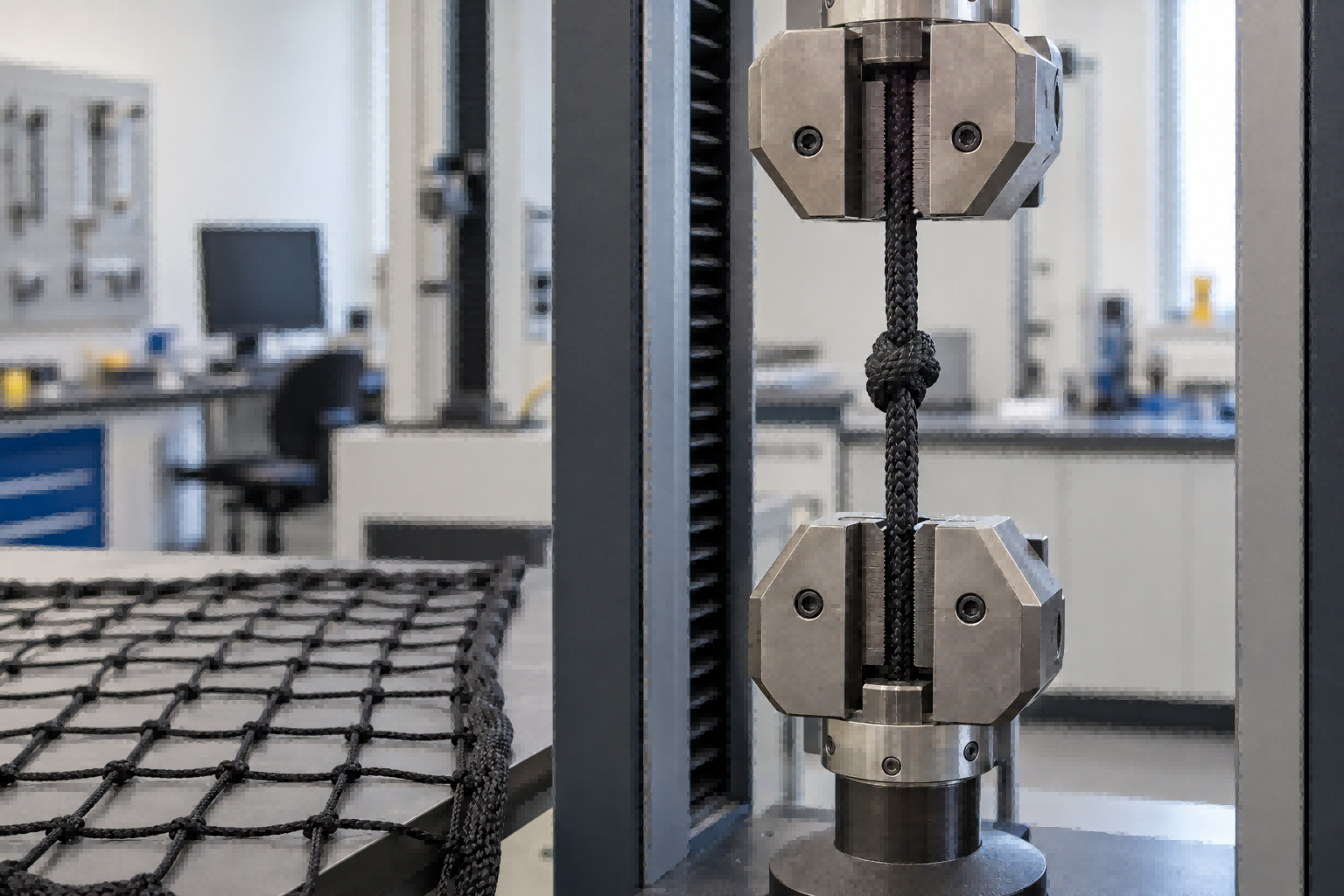
The primary technical indicator is the rope’s breaking load strength, which measures the force a single strand can handle before failing. Industry standards like ASTM F2375 and EN-1263 guide safety net performance requirements.
Key benchmarks include:
- Breaking Load Strength: Baseball safety nets typically require ≥500N per strand—far above training nets, which average 150–300N.
- Certified Standards: Depending on regions and sports, MLB/NCAA guidelines, Golf Range Association of America (GRAA), and construction-driven EN-1263 play significant roles.
- Material Choices: High-Density Polyethylene (HDPE) or knotless netting of 6–8mm thickness are commonly used for golf driving range barriers due to high strength and weather durability.
Why is golf driving range safety netting procurement unique?
Golf driving range nets tend to be high-value purchases that require nuanced buying strategies. A single project can easily reach six figures.
Standard driving range nets are HDPE knotless nets, 6–8mm thick, with dimensions reaching up to 30 meters tall and 300 meters long.[^6] Procurement often exceeds $50,000–$200,000 depending on facility size. Certification, decision time, and supplier reliability are crucial considerations.
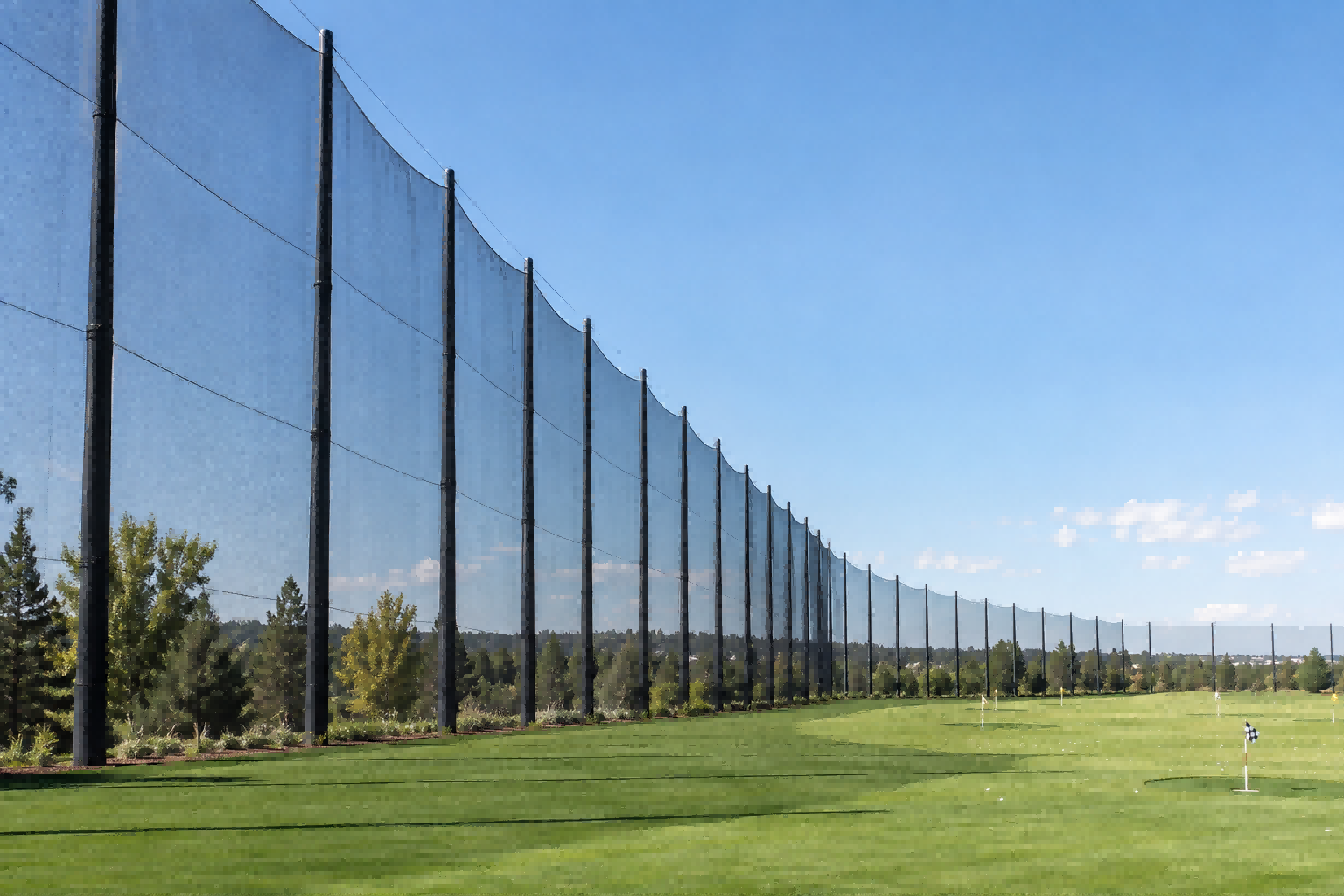
Several reasons set this apart:
- Project Scale: The sheer size and height demand extensive material strength and installation complexity.
- Cost Sensitivity: Average costs range between $10–$20/m²—accuracy ensures no overpayment or shortfall on coverage.
- Decision Timelines: Procurement cycles range from 3–12 months—manufacturers must offer detailed certification files and installation expertise to stay competitive.[^7]
By engaging trusted suppliers who provide turnkey solutions and full compliance documentation, buyers can better navigate this sizeable investment.
Why is installation critical in safety net systems?
Net performance depends not just on material quality but also on the installation system supporting it.
Beyond the netting itself, the border rope tension, connectors, and anchoring components determine system durability. Professional suppliers provide installation engineering to calculate tension requirements and periodic inspection programs.[^8] This avoids failures like torn nets or anchor dislodgment.
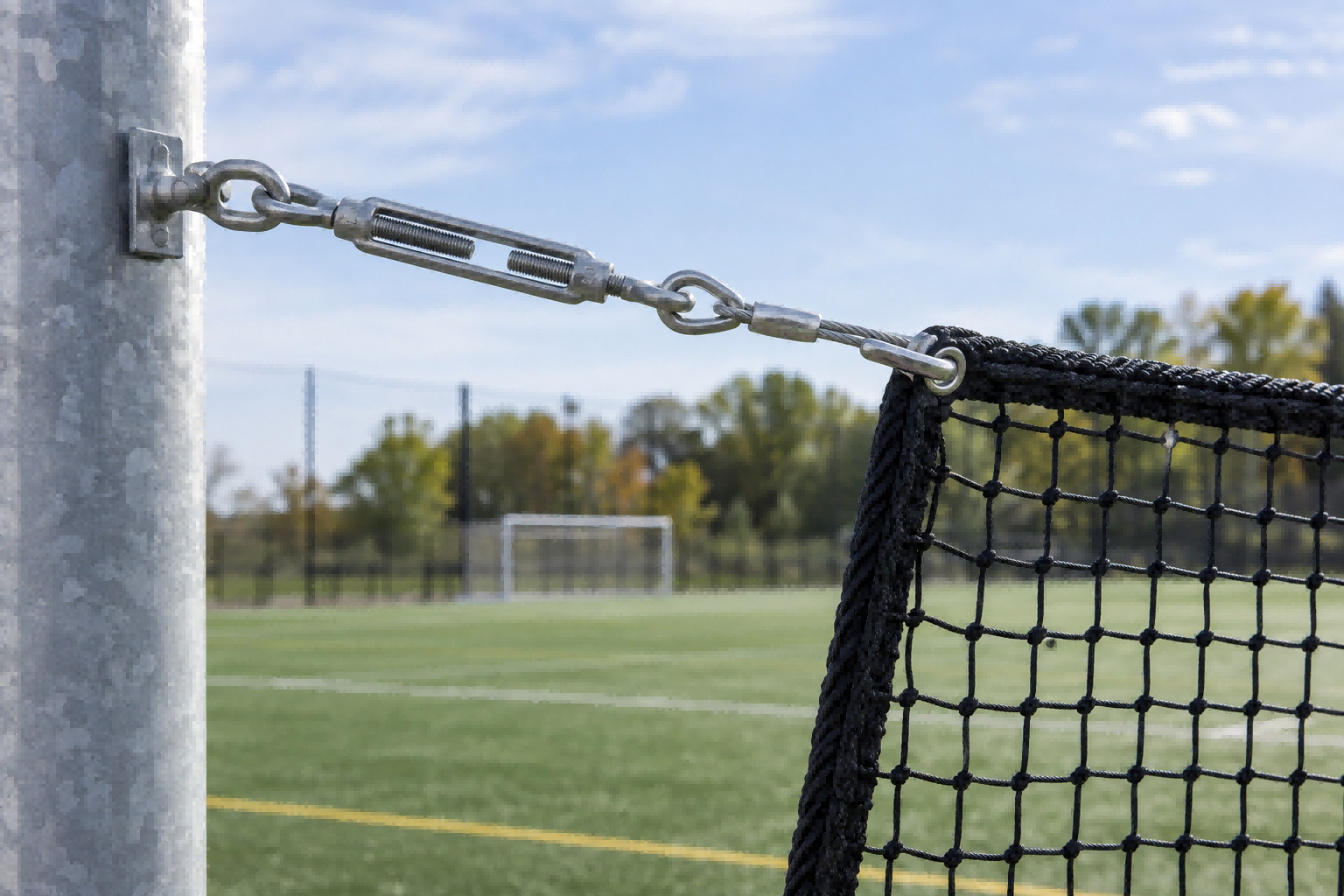
Examples of overlooked components with catastrophic results include:
- Border Rope Design: Over-stretched ropes can weaken impact resistance.
- Connectors & Anchors: Failure here can cause accidents due to system detachment despite intact netting.
- Inspection Neglect: Suppliers should offer maintenance blueprints for retensioning and anchor evaluations every 6–12 months.
Companies selling standalone netting without engineering solutions or post-installation support leave buyers exposed to risks.
Frequently Asked Questions
What’s the difference between safety nets and training nets?
Safety nets prioritize impact resistance and boundary containment, with breaking load strengths ≥500N, while training nets aim at skill practice where durability thresholds are relaxed. Mixing them leads to safety failures.
Which standards should buyers check for compliance?
Baseball nets can follow MLB/NCAA guidance, certificates under ASTM F2375, while golf driving ranges often comply with GRAA norms. EN-1263 remains relevant in European applications. Buyers should always ask for third-party validation.
How much does driving range safety net procurement typically cost?
Standard golf driving range net projects cost between $50,000–$200,000 depending on facility layout and size. Costs per square meter average $10–$20/m² for HDPE knotless net materials.
How long do these nets last?
Does supplier installation matter?
Yes. Reliable suppliers offer turnkey solutions, including tensioning calculations, anchor requirements, and maintenance protocols.[^10] These ensure system integrity over time.
Conclusion
Proper sports facility safety netting is essential to preventing accidents and liability risks. Buyers must understand its distinct applications, opt for nets meeting high breaking load standards, and ensure installation systems are professionally managed. Procurement cycles, especially for high-value projects like golf driving ranges, demand careful planning and certified suppliers.
If your facility needs expert safety netting solutions, I’d love to hear more about your requirements. Reach out, and let’s build safer sports environments together.
[^1]: "Fan Safety at Sports Facilities - Fisher Digital Publications", https://fisherpub.sjf.edu/cgi/viewcontent.cgi?article=1038&context=sport_undergrad&httpsredir=1&referer=. Research studies on sports facility safety netting have shown that properly installed nets significantly reduce the risk of injuries caused by errant balls or players crossing boundaries. Evidence role: general_support; source type: research. Supports: Safety netting prevents accidents and ensures safety in sports facilities.. Scope note: The findings may vary depending on the type of sport and facility design. [^2]: "1926.105 - Safety nets.", http://www.osha.gov/laws-regs/regulations/standardnumber/1926/1926.105. Institutions like ASTM and EN have established standards for safety netting, including breaking load strength requirements to ensure durability and safety. Evidence role: general_support; source type: institution. Supports: Safety nets should meet breaking load strength requirements and industry certifications.. Scope note: Standards may differ by region and sport. [^3]: "From the safety net to the injury prevention web", https://pubmed.ncbi.nlm.nih.gov/30899551/. Educational resources on sports safety highlight case studies where safety nets successfully prevented injuries in high-risk sports environments. Evidence role: case_reference; source type: education. Supports: Safety nets prevent harm by containing errant balls and players within play areas.. Scope note: Case studies may focus on specific sports or facilities. [^4]: "1926.105 - Safety nets.", http://www.osha.gov/laws-regs/regulations/standardnumber/1926/1926.105. Government safety regulations emphasize the importance of impact-resistant netting in sports facilities to minimize injury risks and legal liabilities. Evidence role: expert_consensus; source type: government. Supports: Safety nets must meet impact resistance standards to prevent accidents and reduce liability risks.. Scope note: Regulations may differ by jurisdiction. [^5]: "eTool : Construction - Falls - Safety Net Systems", http://www.osha.gov/etools/construction/falls/safety-net. Institutions like TÜV and SGS provide third-party testing and certification for sports safety nets, verifying compliance with industry standards. Evidence role: general_support; source type: institution. Supports: Third-party test reports ensure compliance with safety net standards.. Scope note: Testing scope may vary by organization. [^6]: "Golf Netting | Shop Golf Nets for Sale & Custom ...", https://www.usnetting.com/sports-netting/golf-netting/?srsltid=AU7gw4XbAnrs8Std7mMU6-h2DmmkO-4qBcWsxp2Qsdy-XbKL0ENjAZQm. Research on golf driving range safety nets highlights HDPE knotless material as a preferred choice for its strength and weather resistance. Evidence role: general_support; source type: research. Supports: HDPE knotless nets are commonly used for golf driving ranges due to their durability and size.. Scope note: Material preferences may vary by region and facility requirements. [^7]: "bid tabulation", https://www.greenwichct.gov/DocumentCenter/View/35057. Educational resources on sports facility procurement emphasize the importance of certifications and installation expertise in lengthy procurement cycles. Evidence role: expert_consensus; source type: education. Supports: Procurement cycles for golf driving range nets often require certifications and installation expertise.. Scope note: Procurement timelines may vary by project scale and region. [^8]: "Where to Install Safety Nets at Sports Facilities", https://netsoftexas.com/blog/where-to-install-safety-nets/. Institutional guidelines recommend engaging suppliers who offer engineering calculations and periodic inspections to ensure safety net integrity. Evidence role: general_support; source type: institution. Supports: Professional suppliers provide engineering and inspection services for safety net installations.. Scope note: Service offerings may vary by supplier. [^9]: "Polyethylene (HDPE) Netting", https://us.leondeoro.com/materials/polyethylene-hdpe-rope-netting/. Studies on HDPE netting durability indicate a lifespan of 5–10 years under optimal maintenance and weather conditions. Evidence role: statistic; source type: research. Supports: HDPE safety nets can last 5–10 years with proper maintenance.. Scope note: Durability may vary based on environmental factors and usage intensity. [^10]: "eTool : Construction - Falls - Safety Net Systems", http://www.osha.gov/etools/construction/falls/safety-net. Institutional recommendations for sports safety net procurement highlight the importance of turnkey solutions, including engineering and maintenance services. Evidence role: general_support; source type: institution. Supports: Turnkey solutions from suppliers include tensioning calculations and maintenance protocols.. Scope note: Service scope may vary by supplier and project requirements.
Questions or Comments?
Share your thoughts below. For OEM/ODM inquiries, contact our factory team directly by email or WhatsApp.