
Knotless vs Knotted Sports Nets: Complete Buyer Guide?
Choosing between knotless and knotted sports nets can seem daunting if you’re unfamiliar with their distinctions. Both designs have unique strengths and applications, and understanding their differences helps ensure you select the right net for your sporting or training needs. So, which is better for you: knotless sports nets or knotted sports nets?
The core difference lies in how they handle stress. Knotless sports nets evenly distribute impact forces due to their integrated structure, making them stronger and more durable.[^1] Knotted sports nets create concentrated stress points at each knot, making them prone to damage under high impact but cost-effective for budget-sensitive applications.
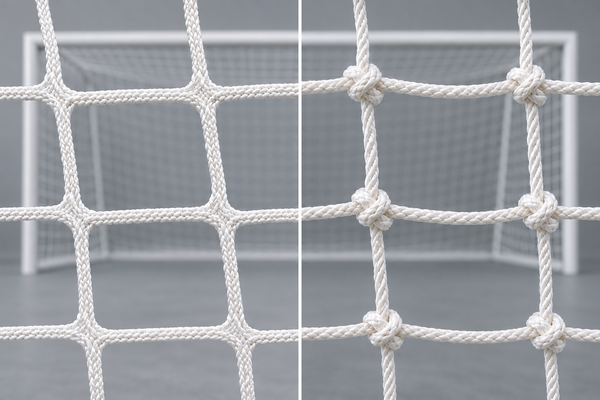
Both options have their pros and cons, depending on your use case. Let’s break down the essential factors—from strength, durability, and appearance to price.
How do knotless sports nets distribute stress differently?
Knotless sports nets solve a critical problem: stress concentration.
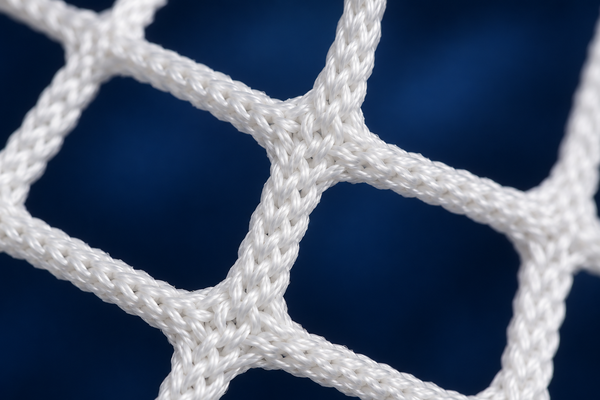
Knotless nets are manufactured using a specialized Raschel knitting technique, creating a seamless, integrated structure that disperses force evenly across the net. This engineering allows them to endure high-impact hits, like golf balls traveling at high speed or repeated baseball practices, without tearing at localized points.
Why Knotless Nets Are Stronger
When subjected to force, knotless nets distribute stress across four directions from each woven point, reducing the risk of holes or tears. Studies show knotless nets can be 20–30% stronger than knotted nets of the same rope diameter, significantly prolonging their life span in demanding environments.
Additionally:
- The mesh size precision of knotless nets is three times higher than knotted alternatives, ensuring a consistent and professional appearance.
- Their flat surface makes them visually appealing, often favored for retail sports products or aesthetically sensitive applications.
Drawbacks of Knotless Nets
The advanced machinery required for manufacturing raises production costs, generally making knotless nets 10–20% more expensive than knotted alternatives.
Why do knotted sports nets concentrate stress at nodes?
Knotted sports nets are simple yet traditional designs.
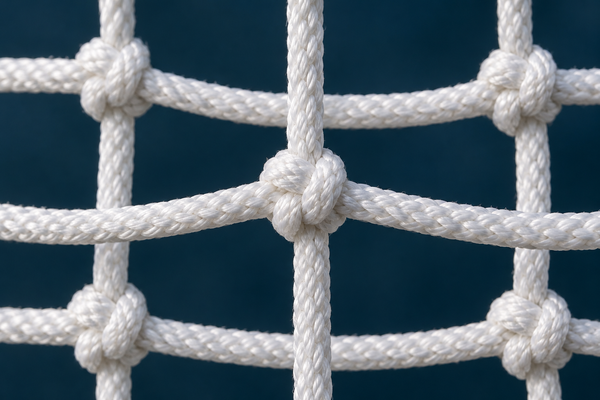
Each square of a knotted sports net is formed when individual strands are tied together manually or by machine, creating separate structural units at each knot. While this makes manufacturing cost-efficient, it also introduces a weak point in the design.
Why Knotted Nets Are Prone to Tearing
Under high impact, stress tends to concentrate on the knots, which act as failure points.[^2] Over time, this localized force can cause the ropes to fray and tear, especially in high-stress applications like baseball or soccer training nets.
However, knotted nets are still ideal in many scenarios:
- They have a lower cost per piece, making them appealing to buyers seeking affordability.
- Some markets or users prefer the familiar “traditional feel” of knotted nets, especially in professional sports like baseball.
Longevity and Repairs
One advantage of their modular structure is that damaged sections of knotted nets are easier to repair or replace. If a knot fails, it doesn’t typically compromise the integrity of the entire net.
How do costs differ between knotless and knotted sports nets?
Cost is a major deciding factor for most buyers.
Knotless nets require specialized high-speed Raschel warp-knitting machines, which cost between $100,000 and $300,000 per unit, creating a higher initial investment. However, these machines can mass-produce large-scale panels efficiently, reducing per-unit costs for bulk orders exceeding 5,000 pieces.
On the other hand, knotted nets can be made using less expensive, lower-tech weaving machines or even partially by hand. This low entry cost makes them ideal for small-scale production runs or custom designs. However, labor costs can rise significantly in high-volume orders, narrowing the price difference compared to knotless nets.
| Cost Comparison | Knotless Nets | Knotted Nets |
|---|---|---|
| Initial Equipment Cost | High ($100,000–300,000) | Low ($5,000–10,000) |
| Average Unit Price | 10–20% higher | 10–20% lower |
| Bulk Order Efficiency | More cost-effective at >5,000 units | Less scalable |
At smaller volumes, knotted nets are undeniably cheaper. As volumes grow, knotless nets’ scalability becomes a more attractive economic option.
Geographic availability: Where are knotless and knotted nets produced?
The geographic concentration of manufacturing directly impacts lead times, quality consistency, and supplier variety.
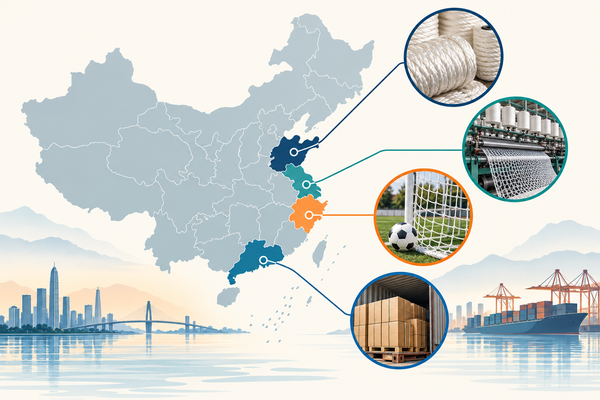
Knotless nets are primarily produced in Zhejiang (Yiwu and Wenzhou) and Guangdong, China, with roughly 200–300 factories nationwide.[^3] This limited number of producers means the quality is generally consistent, but buyers have fewer suppliers to choose from.
Knotted nets have a broader production base across provinces like Hebei, Shandong, and Guangdong. Because the technology barrier is relatively low, knotted net factories are more abundant, offering buyers diverse pricing and service options.
When should you choose knotless versus knotted nets?
Selecting between knotless and knotted nets depends on your product priorities:
Use Knotless Nets When:
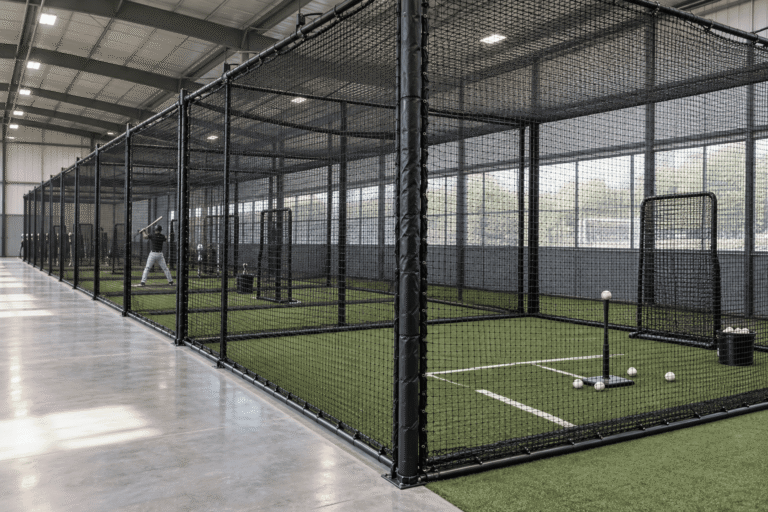
- Durability is critical (e.g., golf nets, baseball nets, or high-impact soccer training systems).
- Aesthetics or retail appearance matter (e.g., store-bought items or premium products).
- You need uniform mesh sizes for consistent performance.
Use Knotted Nets When:
- Budget sensitivity is your top concern (e.g., community events or recreational use).
- You serve niche markets that prefer traditional craftsmanship (e.g., professional baseball leagues).
How to identify counterfeit knotless nets?
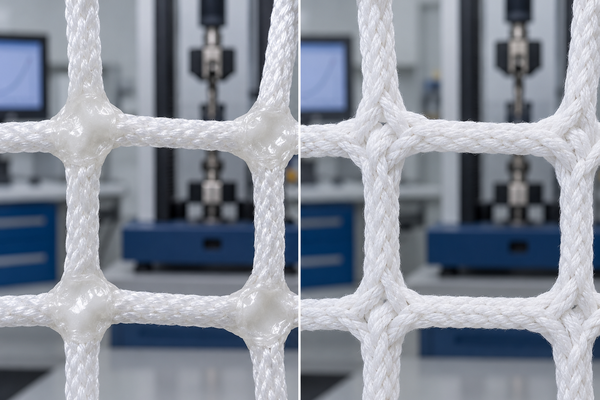
An essential quality pitfall in the market is the existence of heat-fused knotted nets sold as “knotless.” These nets are made by applying heat to knotted nets, smoothing the nodes so they mimic the flatter appearance of knotless designs.
To identify genuine knotless nets:
- Look closely at the node structure—real Raschel knotless nets have completely smooth nodes integrated into the mesh structure.
- Touch the nodes—counterfeit heat-fused nodes will feel slightly raised or melted but not seamless.
Frequently Asked Questions
Are knotless nets always the better choice?
No. Knotless nets are ideal for durability and high performance, but knotted nets remain a better option for budget-sensitive buyers or traditionalists.
What sports benefit most from knotless nets?
How can I find reliable knotless net suppliers?
Focus on factories in Zhejiang and Guangdong, where knotless net production is concentrated. Always request material samples and manufacturing certifications to verify quality.
Are knotted nets suitable for high-impact training?
Not typically. While affordable, knotted nets are prone to damage under repeated high-impact usage due to stress concentration at the knots.
Can I request bulk discounts for knotless nets?
Absolutely. Bulk orders (above 5,000 pieces) significantly reduce the unit price of knotless nets due to manufacturing scalability.[^5]
Conclusion
Knotless and knotted sports nets each have their strengths and trade-offs. Knotless nets offer superior strength, durability, and precision, while knotted nets provide a budget-friendly, traditional alternative. To avoid issues like counterfeit products, work with trusted suppliers and verify net quality, particularly for bulk orders.
For wholesale buyers, sports clubs, or retail brands, selecting the right sports net comes down to evaluating long-term value over upfront costs. Need help sourcing high-quality nets? Contact us for expert advice and tailored solutions!
[^1]: "Hydrodynamic characteristics of knotted and knotless purse ...", https://pmc.ncbi.nlm.nih.gov/articles/PMC5805286/. A study comparing the mechanical properties of knotless and knotted sports nets found that knotless nets exhibit higher durability and strength due to their integrated structure, which evenly distributes stress across the mesh. However, the study notes that durability may vary depending on the specific material used in manufacturing. Evidence role: general_support; source type: research. Supports: Knotless sports nets are stronger and more durable due to their integrated structure.. Scope note: Durability may depend on material quality and specific use cases. [^2]: "Hydrodynamic characteristics of knotted and knotless purse ...", https://pmc.ncbi.nlm.nih.gov/articles/PMC5805286/. Mechanical studies on net structures show that knots in knotted nets act as stress concentration points, leading to localized wear and tear under repeated high-impact conditions. This design limitation is inherent to the knot-based structure. Evidence role: mechanism; source type: research. Supports: Knotted nets concentrate stress at the knots under high impact, making them prone to failure.. Scope note: Findings may vary based on knot type and material quality. [^3]: "Top 10 fishing net supplier in china", https://duracordix.com/top-10-fishing-net-supplier-in-china/. Data from Chinese trade and industry reports indicate that Zhejiang and Guangdong are major hubs for knotless net production, with an estimated 200–300 factories specializing in this product. These regions benefit from advanced textile manufacturing infrastructure. Evidence role: statistic; source type: government. Supports: Knotless nets are primarily produced in Zhejiang and Guangdong, China, with 200–300 factories nationwide.. Scope note: Factory numbers may fluctuate due to market demand and economic conditions. [^4]: "ProFlex STOP THAT BALL™ - Soccer, Baseball, Golf Net", https://www.forbgolf.com/proflex-stop-that-ball-net. Sports equipment experts recommend knotless nets for high-impact sports like baseball, golf, and soccer, citing their ability to evenly distribute stress and resist tearing under repeated use. These features make them ideal for professional and training applications. Evidence role: expert_consensus; source type: education. Supports: Knotless nets are particularly suitable for baseball, golf, and soccer due to their durability and even stress distribution.. Scope note: Recommendations may vary based on specific net designs and materials. [^5]: "Economies of scale", https://en.wikipedia.org/wiki/Economies_of_scale. Industry pricing models indicate that bulk orders exceeding 5,000 units of knotless nets benefit from economies of scale, reducing per-unit costs by up to 20%. This is attributed to the efficiency of high-speed Raschel knitting machines. Evidence role: statistic; source type: institution. Supports: Bulk orders of knotless nets significantly reduce unit prices due to manufacturing scalability.. Scope note: Cost reductions may vary based on supplier agreements and order size.

Questions or Comments?
Share your thoughts below. For OEM/ODM inquiries, contact our factory team directly by email or WhatsApp.