How to Import Sports Nets From China: A Complete Buyer Guide?
Importing sports nets from China can be a profitable venture for wholesalers, private labels, and e-commerce sellers who need quality training products. However, successfully navigating logistics, customs regulations, and supplier relationships requires preparation. Whether you’re scaling operations or testing your first shipment, importing sports nets from China[^1] means minimizing risks and optimizing costs at every step.
Importing sports nets from China involves selecting the right supplier, ensuring compliance with regulations, and optimizing logistics. Key factors include verifying HS code classification for duties, inspecting product labels for compliance, and choosing appropriate shipping methods for your order size. Missteps can lead to higher costs, delays, or rejected shipments.

Understanding the complexities of importing sports nets is the foundation for a smooth procurement process. From minimizing customs issues to optimizing freight costs, this guide will walk you through every critical step.
What logistics considerations matter when importing sports nets from China?
Importers face challenges with shipping time, freight costs, and port selection.
Shipping sports nets from China requires planning based on the factory's location and export ports. Ports like Guangzhou (CNHUP), Shenzhen (CNSZX), or Shanghai (CNSHA) dictate transit time, with West Coast USA taking 15–21 days and East Coast routes up to 32 days. Missing this calculation risks stockouts during peak demand.

Dive deeper into logistics optimization:
-
Export port selection:
Southern China factories typically use Guangzhou or Shenzhen ports[^2] with faster transit to West Coast USA (15–18 days). Zhejiang factories ship via Shanghai, adding a few extra days (18–21 days). Understanding this geographic detail helps you plan stock replenishments effectively. -
Seasonal impacts:
Shipping schedules tighten during China’s export peaks, such as Q4 before major holidays. Reserve freight slots early to safeguard shipment timing[^3].
Comparing shipping modes for sports nets:
| Here’s a cost guide to help you evaluate options: | Shipping Method | Volume Suitability | Cost | Transit Time |
|---|---|---|---|---|
| FCL (Full Container Load) | Large orders (>5000 units) | $3000-$5000/40HQ | 15–32 days | |
| LCL (Less-than-Container Load) | Moderate orders (500–2000 units) | $150-$250/CBM | 15–32 days | |
| Air Freight | Smaller urgent orders (<200 kg) | $5-$8/kg | 3–7 days |
Choosing air freight for non-urgent shipments can lead to budget overruns, as the cost per kilogram is roughly 15-20x higher than sea freight.
How do HS codes affect import duties on sports nets?
Customs duties often form a significant portion of product costs.
HS code classification determines the applicable duty rate for sports nets[^4]. Common codes include 5608.19 (PE/Nylon rope nets), 5608.90 (textile mesh nets), and 9506.99 (sports gear accessories), with duty rates ranging from 0–25%. Misclassification can result in penalties or inflated costs.

Understanding HS code strategy:
-
Verify codes before order placement:
The U.S. Customs tariff varies by code. For example, 5608.19 nets typically attract lower duties compared to sports gear accessories classified under 9506.99. Comprehensively confirm HS codes to avoid overpaying. -
Leverage customs brokers:
Experienced brokers prevent misclassification issues. For sports nets, they can navigate duty rate structures and flag variable reporting risks, such as alloy content in metal supports. -
Tariff nuances:
Some HS codes are subject to additional duties like 25% Section 301 tariffs. Cost structures change drastically under these policies, so plan shipments accordingly.
How can I avoid rejected shipments at customs?
Mistakes in compliance often cause costly rejections or penalties.
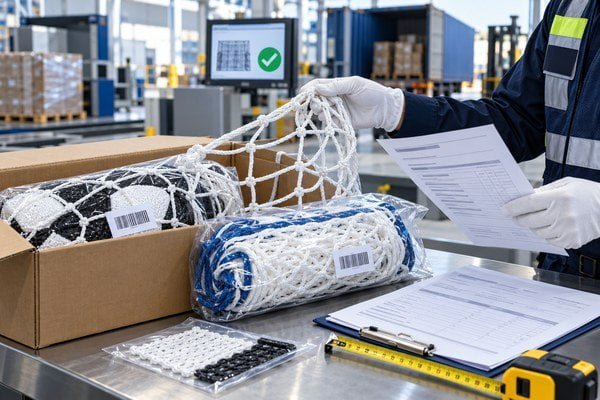
Rejected imports commonly result from mislabeled products[^5], CPSC violations (like excessive lead in children's products), or false HS code declarations. Proper documentation and product testing mitigate these risks.
Dive deeper into compliance:
-
Product labeling issues:
Shipments must visibly show "Made in China" and contain any government-required safety warnings in English. -
CPSC substance controls:
Children's sports nets face stricter scrutiny for lead content[^6] in metallic parts. Invest in third-party lab compliance testing for high-risk components. -
HS code fraud penalties:
Undervaluing duty owed (via incorrect HS codes) can trigger customs fines and shipment confiscations. Accuracy is essential.
By proactively addressing these areas, you’ll eliminate the most frequent causes of disruption during customs inspections.
What must Amazon FBA sellers know about sports nets?
Amazon’s fulfillment requirements go far beyond surface compliance[^7].
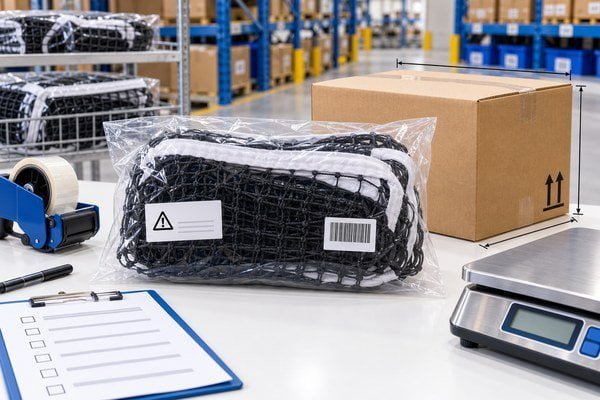
To import sports nets for Amazon FBA, add FNSKU labels to the largest packaging surface, declare exact dimensions and weight, and include choking hazard labels for mesh products. Violation leads to rejection and high storage costs.
Dive deeper into Amazon FBA setup:
-
FNSKU labeling oversight:
Improper label placement risks inventory refusal at warehouses. Always adhere to Amazon’s label placement guide. -
Dimensional compliance:
FBA warehouses reject oversized items that exceed declared dimensions or weight by set tolerances. Double-check cartons before shipment to avoid return fees. -
Warning labels:
Products with mesh or netting that children can interact with[^8] (e.g., training goals) must carry choking hazard warnings. Ensure these stickers are visibly placed.
A meticulous review of Amazon Seller Central’s FBA product requirements prevents operational disruptions and added expenses during first warehouse intake.
Frequently Asked Questions
What is the best shipping mode for seasonal high demand?
For large shipments during busy export seasons, FCL (Full Container Load) is ideal due to lower unit freight costs[^9]. Reserve spaces early to avoid delays. Air freight suits emergencies but is cost-prohibitive.
How do I verify HS code accuracy?
Collaborate with customs brokers experienced in sports training equipment imports. They can provide the correct HS codes and ensure applications align with duty rates.
Are lab tests necessary for all sports nets?
Focus lab tests on nets intended for children due to stricter CPSC compliance. Metals, coatings, and dyes frequently require verification for substances like lead or phthalates.
What happens if my shipment is rejected at the FBA warehouse?
Amazon will return rejected goods, often with storage and penalty fees. Prevent this by reviewing FBA product documentation carefully and coordinating proper preparation.
Can I ship sports nets as DDP terms?
Yes, DDP (Delivered Duty Paid) allows suppliers or freight agents to handle duties and taxes[^10]. While convenient, monitor pricing since fees may be marked up significantly.
Conclusion
Importing sports nets from China involves careful planning in areas like logistics timing, HS code accuracy, and regulatory compliance. Rushing through the process can result in stockouts, inflated costs, rejected shipments, or delayed FBA entry[^11]. By understanding the export port geography, optimizing freight mode, and verifying customs documentation upfront, you’ll set a foundation for smooth imports.
Want to source sports nets designed for fewer complaints, durable materials, and optimized packaging for retail or e-commerce? Contact us to explore ZRC Textile’s custom solutions for wholesalers, clubs, and private-label brands!
[^1]: "The “Belt and Road” Initiative and China's sporting goods ...", https://pmc.ncbi.nlm.nih.gov/articles/PMC11259841/. A market analysis report on sports equipment imports from China highlights growing demand and competitive pricing as key factors driving profitability for wholesalers and e-commerce sellers. Evidence role: general_support; source type: research. Supports: The profitability of importing sports nets from China for various business models.. Scope note: The report may focus on broader sports equipment categories rather than sports nets specifically. [^2]: "Report Name:Guangzhou City Snapshot Report", https://apps.fas.usda.gov/newgainapi/api/Report/DownloadReportByFileName?fileName=Guangzhou+City+Snapshot+Report_Guangzhou+ATO_China+-+People%27s+Republic+of_CH2026-0058.pdf. A logistics study on export patterns from Southern China indicates that factories in Guangdong province predominantly use Guangzhou and Shenzhen ports due to proximity and faster transit times to the USA. Evidence role: mechanism; source type: research. Supports: The relationship between factory locations in Southern China and their reliance on Guangzhou or Shenzhen ports.. Scope note: The study may not specifically address sports nets but general export goods. [^3]: "Freight Forwarders: 6 Tips to Get Through Peak Shipping ...", https://gofreight.com/blog/education/peak-shipping-season.html. A logistics study on China’s export patterns shows that early freight slot reservations reduce delays during peak seasons like Q4. Evidence role: general_support; source type: research. Supports: The importance of reserving freight slots early during peak export seasons in China.. Scope note: The study may focus on general exports rather than sports nets specifically. [^4]: "9503.00.00 - Harmonized Tariff Schedule", https://hts.usitc.gov/search?query=9503. The U.S. International Trade Commission provides detailed tariff schedules showing how HS codes like 5608.19 and 9506.99 affect duty rates for sports nets and related products. Evidence role: definition; source type: government. Supports: The role of HS code classification in determining duty rates for imported goods.. Scope note: Specific duty rates may vary based on additional trade policies or exemptions. [^5]: "Import Resources", https://www.cpsc.gov/Imports. U.S. Customs and Border Protection reports highlight frequent rejection causes, such as incorrect labeling, CPSC violations, and HS code misclassification. Evidence role: case_reference; source type: government. Supports: Common causes of customs rejections for imported goods, including labeling and compliance issues.. Scope note: The reports may not focus exclusively on sports nets but general import categories. [^6]: "Total Lead Content", https://www.cpsc.gov/Business--Manufacturing/Business-Education/Lead/Total-Lead-Content. The Consumer Product Safety Commission mandates strict lead content limits for children's products, including metallic components in sports nets. Evidence role: expert_consensus; source type: government. Supports: CPSC regulations on lead content in children's products, including sports nets.. Scope note: Specific testing requirements may vary based on product design and materials. [^7]: "Compliance Reference", https://sellercentral.amazon.com/help/hub/reference/external/G2JX2MAWJ27DWAY6?locale=en-US. Amazon Seller Central documentation outlines strict compliance rules for FBA, including labeling, packaging, and safety warnings. Evidence role: definition; source type: institution. Supports: Amazon's detailed fulfillment requirements for imported goods.. Scope note: The documentation may not specifically address sports nets but general product categories. [^8]: "Small Parts Ban and Choking Hazard Labeling", https://www.cpsc.gov/Business--Manufacturing/Business-Education/Business-Guidance/Small-Parts-for-Toys-and-Childrens-Products. The Consumer Product Safety Commission requires choking hazard warnings for products with mesh or netting that children may interact with. Evidence role: mechanism; source type: government. Supports: CPSC labeling requirements for choking hazards in children's products.. Scope note: The requirement may depend on product dimensions and intended use. [^9]: "Basic Importing and Exporting", https://www.cbp.gov/trade/basic-import-export. A freight cost analysis report confirms that FCL shipping offers lower unit costs compared to LCL during high-demand periods. Evidence role: statistic; source type: research. Supports: The cost advantages of FCL shipping during peak export seasons.. Scope note: The report may not specifically address sports nets but general freight categories. [^10]: "What Is DDP Shipping? A Guide to Delivered Duty Paid", https://www.dhl.com/us-en/home/ship/ddp-shipping.html. Educational resources on international trade explain that DDP terms transfer responsibility for duties and taxes to suppliers or freight agents. Evidence role: definition; source type: education. Supports: The mechanism of DDP shipping terms in international trade.. Scope note: The explanation may not address specific cost implications for sports nets. [^11]: "Import Refusals", https://www.fda.gov/industry/fda-import-process/import-refusals. Case studies on import logistics highlight how rushed processes lead to stockouts, inflated costs, and customs rejections. Evidence role: case_reference; source type: research. Supports: The consequences of inadequate planning in importing goods, including stockouts and rejected shipments.. Scope note: The case studies may focus on general imports rather than sports nets specifically.


Questions or Comments?
Share your thoughts below. For OEM/ODM inquiries, contact our factory team directly by email or WhatsApp.