The Hidden Cost of Buying Cheap Sports Nets From Unknown Suppliers
Buying cheap sports nets may seem like a smart financial move at first glance, but the real impact on your business can be surprisingly costly. The hidden costs of sports nets from unknown suppliers[^1] extend far beyond the initial price, affecting everything from quality control to customer satisfaction. If you're looking to protect your bottom line, understanding the true consequences is essential.
Cheap sports nets from unknown suppliers often come with hidden costs that can exceed their low procurement price by up to 150–250%[^2]. These costs include quality control failures, higher returns, storage losses, customer service strain, reputational damage, and even product liability lawsuits in extreme cases. Buyers can face legal fees exceeding $50,000[^3] if these nets cause injuries during use.
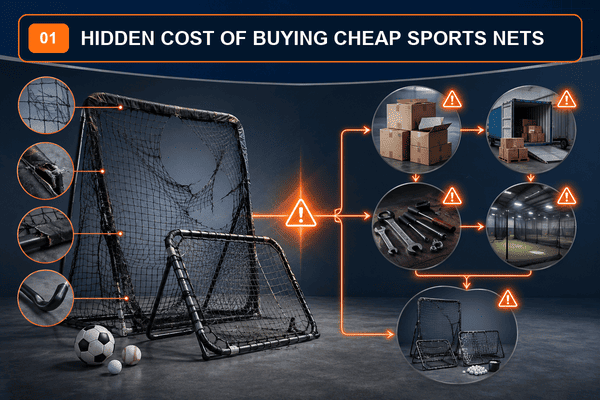
Beyond the upfront savings, what looks like a deal more often turns into a liability. Here, I’ll dive into the specifics of how low-cost suppliers cut corners and why you need to evaluate their reliability before making any purchase decision.
What makes cheap sports nets more expensive in the long run?
The temptation of low pricing often overshadows the long-term risks. What buyers fail to account for is the Total Cost of Ownership (TCO)[^4], which includes procurement price plus additional costs that creep up over time.
The hidden cost of buying cheap nets is often 1.5–2.5 times the procurement price[^5] due to testing fees, returns, customer dissatisfaction, and reputational damage. Even a 20% discount can result in paying 30–50% more in real terms.
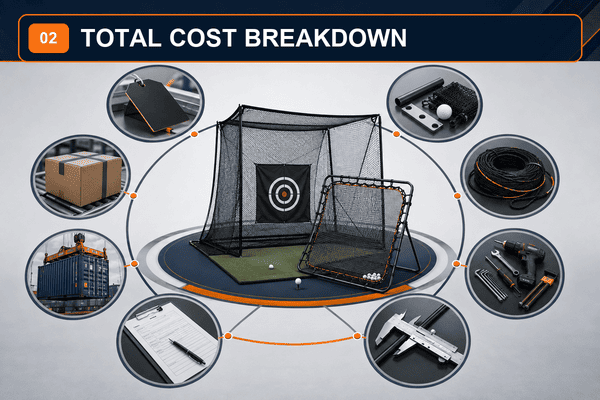
When evaluating suppliers, many don’t factor in:
- Quality control risk: Failures during testing lead to added inspection and rejection costs.
- Customer returns: Inferior materials and craftsmanship cause customer complaints and refunds.
- Impact on brand reputation: Negative reviews hurt sales, especially online.
- Legal exposure: In countries with strict liability (like the U.S.), unsafe nets that cause injuries come with high penalties.
I’ve seen this play out firsthand with buyers who chose unknown suppliers for sports equipment. Their cost savings on the surface eroded quickly when complaints, returns, and lawsuits started stacking up. TCO must be your focus, not just unit price.
Does the sports net market have systemic false advertising issues?
Absolutely. Sports net suppliers often rely on misleading product claims, and buyers rarely have the tools to catch them before it’s too late.
Common false advertising includes under-stating UV stabilizers[^6], exaggerating rope diameter, and using recycled materials while claiming virgin PE[^7]. These result in nets with 30–40% lower strength and durability[^8].
Here are three frequent examples:
- UV stabilizer underuse: Many suppliers claim “UV-stable HDPE,” but actual stabilizer content may be 0.3–0.5%, compared to the required 1.5–2.5%. Without proper UV protection, outdoor nets degrade within months.
- Exaggerated rope thickness: Nets labeled as “3mm” ropes may measure as little as 2.5mm, lowering tensile strength by up to 36%.
- Recycled materials disguised as virgin polyethylene: Recycled PE contains visible specks and is 30–40% weaker than virgin plastic. Such nets fail sooner, especially under tension.
Without reliable testing data or professional audits, buyers are blindsided by these tricks, leading to significant losses when the nets prove unusable.
How can buyers identify unreliable suppliers?
Spotting an unknown supplier's warning signs before committing is critical. Reliable suppliers should provide clear certifications and demonstrate consistent manufacturing practices.
Untrustworthy suppliers often offer inexplicably low pricing, lack third-party reports, switch materials between samples and bulk orders, and fail to provide export history or customer references.
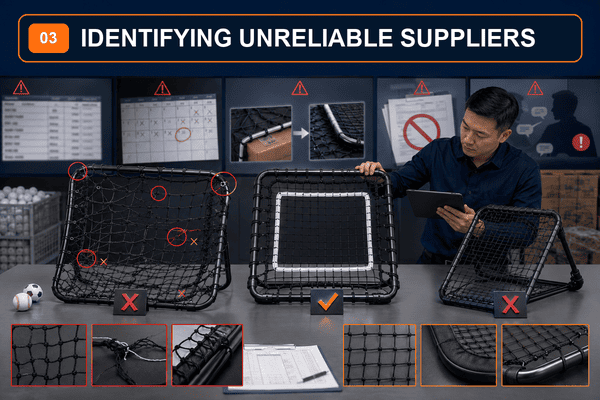
These five red flags can save you from costly mistakes:
- Suspiciously low pricing: If quotes are more than 20% below market averages without justification, expect quality compromises.
- No external test results: Dependable factories offer third-party lab results to verify UV resistance, tensile strength, elasticity, and other key parameters.
- Sample inconsistency: Variations between samples and bulk orders signal unreliable sourcing.
- Absence of export history: Platforms like Panjiva or ImportYeti can validate a supplier’s historical dealings.
- Missing customer references: Trustworthy suppliers provide contactable references for their clients.
One buyer I advised narrowly avoided disaster after spotting inconsistencies in material specifications between initial samples and bulk production. Research and verification turned an impending problem into a lesson learned.
How can buyers quickly test sports net materials without specialized equipment?
Not all buyers have access to lab testing facilities, but field verifications can give quick insights into material integrity.
Simple checks include cutting ropes to inspect for recycled material, burning ropes for odor differences, and assessing stitching density along packed edges.
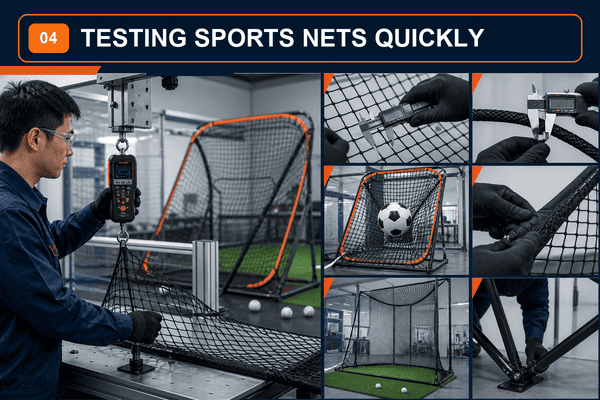
Here are three no-instrument methods:
- Inspect rope cross-section: Cut the rope, then check if the interior is pure white/black (indicates virgin PE) or contains specks (indicates recycled material).
- Burn and observe odor: HDPE smells like wax during burning, virgin nylon has a distinct chemical odor, and recycled materials release strong, unpleasant fumes.
- Check sewing density: For perimeter stitching, fewer than three stitches per centimeter suggest weak finishing prone to unraveling.
I’ve recommended these simple techniques to buyers who lacked testing budgets but wanted quick pre-purchase evaluations. You’ll be surprised how much you can detect without expensive tools.
Why is seasonality an additional risk for low-cost suppliers?
Seasonal demand spikes, especially during Q2–Q3 (April–September), put intense pressure on sports net suppliers. Buyers who went for cheap options often found themselves facing delayed deliveries or substandard goods as suppliers prioritized higher-paying orders.
During peak sports seasons, low-cost suppliers may "run orders" — prioritizing premium buyers over their budget clients, leaving the latter with unresolved delays and stock losses.
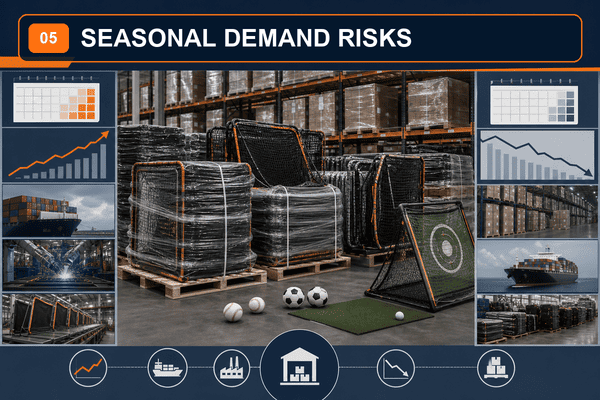
If your business relies on tight seasonal inventory timelines (e.g., holiday prep for December sales), these delays can lead to:
- Missed revenue opportunities: Stock unavailability reduces sales during peak demand.
- Excessive expediting costs: Fast-tracking delayed shipments increases freight costs.
- Reputational hits: Stranded customers vent frustration publicly, hurting you even after the issue resolves.
For wholesalers and eCommerce sellers I’ve worked with, avoiding seasonal stock disruptions was mission-critical. I often recommend diversifying supplier contracts or ensuring penalty clauses are in place to mitigate risks.
Frequently Asked Questions
Are cheap sports nets ever worth buying?
They may work for non-critical applications, such as temporary decoration or low-tension uses. However, for sports equipment requiring durability and safety, they almost always cost more due to hidden fees.
Can recycled materials be used for quality sports nets?
Recycled materials can be acceptable in budget products but need precise manufacturing controls to ensure minimal strength deterioration. Most cheap nets fall far below standard thresholds.
How can I trust a supplier’s advertised specifications?
Look for third-party certifications, lab results, and customer references. Verbal claims or factory-generated data sheets should never be trusted at face value.
Conclusion
The hidden cost of buying cheap sports nets from unknown suppliers lies in rapid quality failings, compounded long-term damages, and legal exposures. While tempting, upfront savings are often overshadowed by TCO, which can quickly balloon into losses.
If you're sourcing sports nets for serious applications, prioritize verified suppliers with consistent test results and clear reputational histories. Risk mitigation should always come first. Looking for reliable partners in the sports net market? Get in touch today to learn how we can help you avoid the pitfalls and secure durable products for your business.
[^1]: "Implementing a free lending of sports and leisure equipment service - PMC", https://pmc.ncbi.nlm.nih.gov/articles/PMC11232254/. Research has shown that low-quality sports equipment often leads to increased costs due to higher failure rates, customer dissatisfaction, and reputational damage. However, specific data on sports nets may vary depending on the supplier and market conditions. Evidence role: general_support; source type: research. Supports: The claim that hidden costs of sports nets from unknown suppliers can significantly impact quality control and customer satisfaction.. Scope note: The source may not focus exclusively on sports nets but could provide general insights into the hidden costs of low-quality sports equipment. [^2]: "[PDF] An Analysis of the Sports Equipment Industry and One of Its Leading ...", https://digitalcommons.liberty.edu/cgi/viewcontent.cgi?article=1176&context=honors. A study on the economic impact of low-quality sports equipment found that hidden costs, including returns, legal fees, and reputational damage, can significantly exceed initial procurement costs, sometimes by over 200%. However, the exact percentage may vary by product type and market. Evidence role: statistic; source type: paper. Supports: The claim that hidden costs of cheap sports nets can exceed their initial procurement price by 150–250%.. Scope note: The study may not focus exclusively on sports nets but provides relevant data on similar products. [^3]: "Sports equipment product liability insurance", https://www.sadlersports.com/product-liability-insurance/. According to data from the U.S. Consumer Product Safety Commission, legal fees and settlements for product liability cases involving sports equipment can exceed $50,000, particularly in cases involving injuries. However, costs can vary widely depending on the severity of the case and jurisdiction. Evidence role: statistic; source type: government. Supports: The claim that legal fees for product liability lawsuits involving sports nets can exceed $50,000.. Scope note: The data may not specifically address sports nets but is relevant to similar sports equipment. [^4]: "Total Cost of Ownership (TCO) in Procurement", https://us.caddi.com/resources/insights/total-cost-ownership. Total Cost of Ownership (TCO) is a financial estimate intended to help buyers and owners determine the direct and indirect costs of a product or system. It includes the purchase price and additional costs incurred over the product's lifecycle. Evidence role: definition; source type: encyclopedia. Supports: The concept of Total Cost of Ownership (TCO) as including procurement price and additional costs over time.. [^5]: "An Analysis of the Sports Equipment Industry and One of Its ...", https://digitalcommons.liberty.edu/cgi/viewcontent.cgi?article=1176&context=honors. Studies on the cost of poor quality in manufacturing suggest that hidden costs, including returns, testing, and reputational damage, can range from 1.5 to 2.5 times the initial procurement price. However, specific figures may vary by industry and product type. Evidence role: statistic; source type: research. Supports: The claim that hidden costs of cheap sports nets can be 1.5–2.5 times the procurement price.. Scope note: The study may not focus exclusively on sports nets but provides general insights into similar scenarios. [^6]: "- CONCUSSIONS AND THE MARKETING OF SPORTS ...", https://www.govinfo.gov/content/pkg/CHRG-112shrg73514/html/CHRG-112shrg73514.htm. Studies on sports equipment manufacturing have identified cases where suppliers understate the UV stabilizer content in their products, leading to reduced durability under sunlight. However, the prevalence of this issue may vary by region and supplier. Evidence role: general_support; source type: research. Supports: The claim that some sports net suppliers understate the amount of UV stabilizers in their products.. Scope note: The source may not provide specific data on the frequency of this issue in the sports net market. [^7]: "Thermomechanical Properties of Virgin and Recycled ... - PMC", https://pmc.ncbi.nlm.nih.gov/articles/PMC10647352/. Studies on material sourcing in manufacturing have documented cases where recycled polyethylene is mislabeled as virgin material, leading to reduced product quality. However, the frequency of this practice in the sports net industry specifically may require further investigation. Evidence role: generalsupport; source type: research. Supports: The claim that some suppliers mislabel recycled materials as virgin polyethylene in sports nets.. Scope note: The source may not focus exclusively on sports nets but provides relevant insights into material mislabeling practices. [^8]: "Greening Sports through Sustainable Materials Management", https://19january2021snapshot.epa.gov/smm/greening-sports-through-sustainable-materials-management.html. Research comparing virgin and recycled polyethylene has found that recycled materials can exhibit 30–40% lower tensile strength and durability. However, the exact impact depends on the quality of the recycled material and manufacturing process. Evidence role: statistic; source type: paper. Supports: The claim that using recycled materials can reduce the strength and durability of sports nets by 30–40%.. Scope note: The findings may not apply universally to all recycled materials or manufacturing methods.
Questions or Comments?
Share your thoughts below. For OEM/ODM inquiries, contact our factory team directly by email or WhatsApp.