
Sports Netting Industry Trends 2026: What Global Buyers Should Know
Global buyers in the sports netting industry are navigating an evolving landscape shaped by rising youth sports participation, sustainability mandates, and supply chain adjustments. The sports netting industry is one of the fastest-growing segments of the global sports goods market, offering opportunities for strategic procurement and product innovation. Here, I’ll explore key trends influencing the market as we approach 2026.
By 2026, sports netting demand is expected to grow significantly; global B2B buyers must understand sustainability requirements, market-specific opportunities, AI-driven product design, and supply chain shifts to succeed[^1].
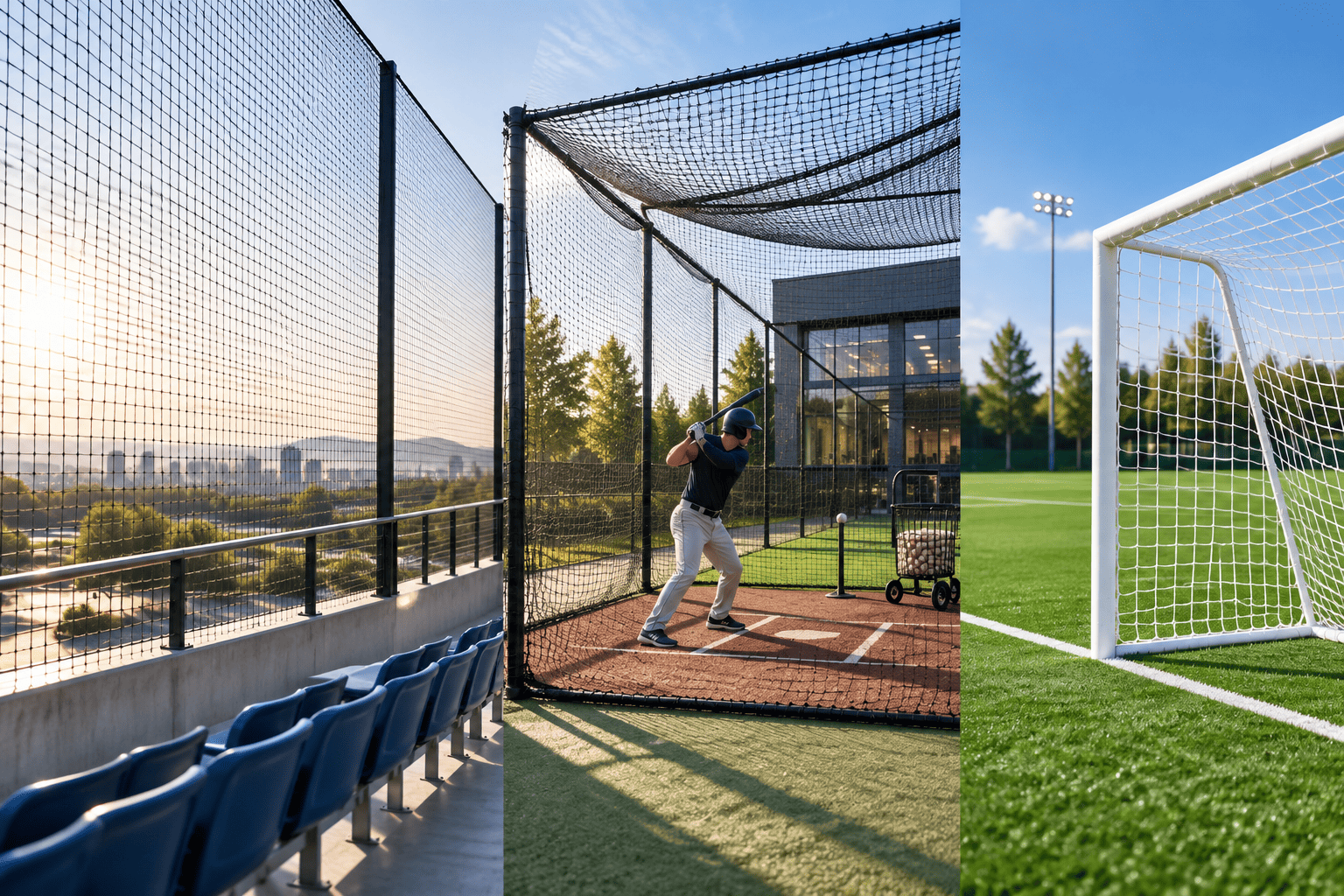
The following analysis will help buyers position themselves for growth opportunities while mitigating risks tied to emerging materials, regulatory shifts, and global trade changes.
How will macro trends impact the sports netting industry?
The sports netting industry is accelerating due to macro trends such as youth sports adoption and home fitness expansion.
According to Statista, the global sports equipment market was valued at $545 billion in 2023, with an estimated increase to $650–700 billion by 2026[^2]. Sports netting, including training nets, soccer goals, and safety nets, is growing faster than the market average, with annual growth rates of 8–12%[^3].
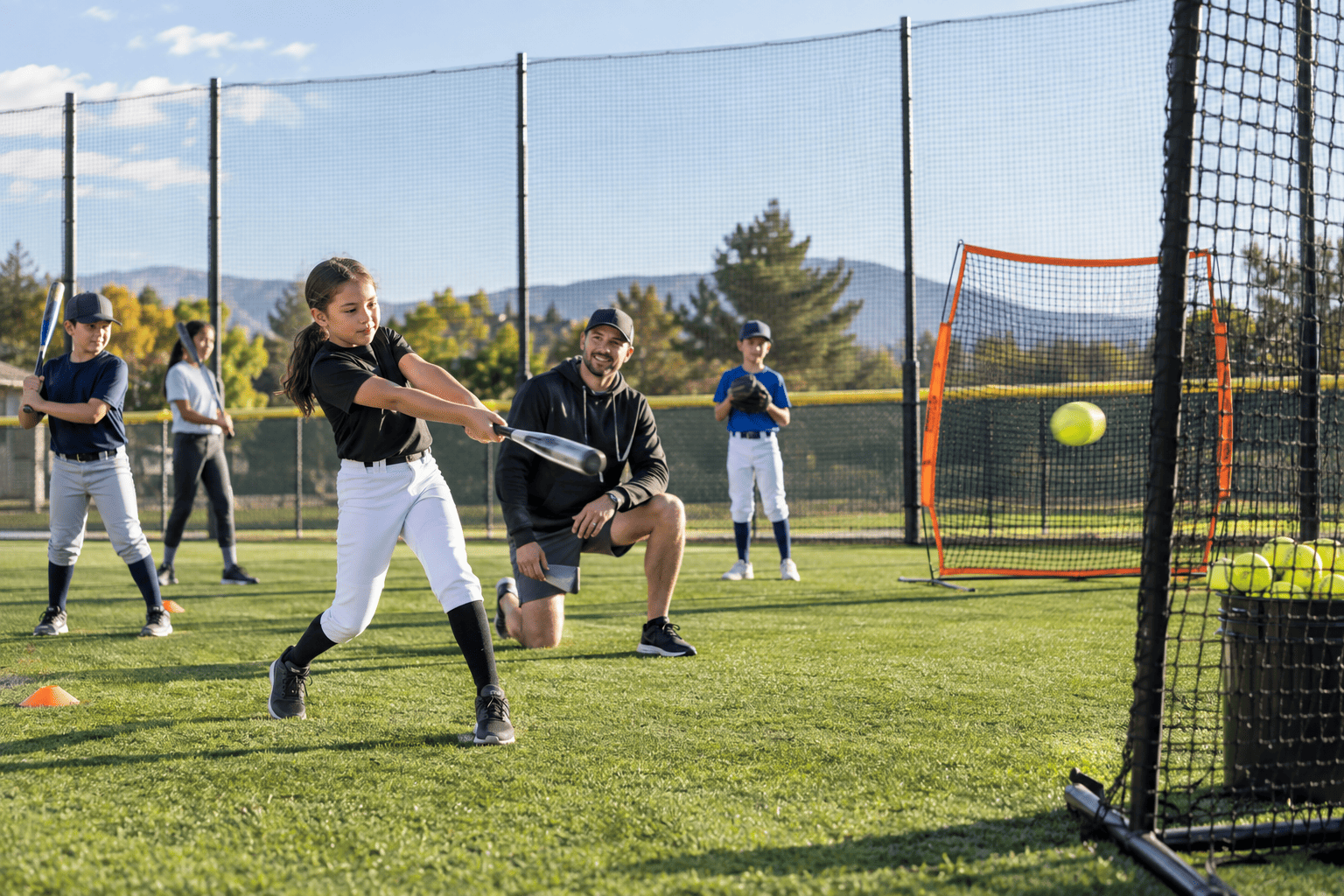
This demand growth is powered by the global rise in youth sports participation, particularly in Asia-Pacific emerging markets[^4], and structural expansion in home fitness trends. For B2B buyers, these trends signal sustained opportunities to broaden their offerings and meet expanding demand across age groups and applications.
Buyer Takeaways: Navigating this expansion
- Market diversification: Focus on high-growth regions, such as Southeast Asia, where schools and sports programs are investing in infrastructure.
- Product differentiation: Invest in high-quality materials and designs for durability, which aligns with professional and youth sports demands.
Will sustainable materials drive procurement decisions in sports netting?
Environmental consciousness is becoming central to sports netting procurement strategies, especially rPET (recycled polyester).
From 2025 to 2027, "sustainable materials" will dominate B2B sports net procurement. European sports facilities, Decathlon, and similar large buyers now request rPET-based nets with Global Recycled Standard (GRS) certifications[^5], a trend expected to expand significantly in the U.S. market by 2026.

Chinese suppliers are beginning to manufacture rPET nets, but these come with limited production capacities and higher prices[^6] — around 15–25% above standard PE nets. While the upfront costs are higher, early adopters gain a competitive edge through differentiation tied to sustainability credentials.
Buyer Takeaways: Planning for sustainability
- Certification transparency: Request GRS documentation from suppliers to ensure compliance for rPET purchases.
- Cost strategy: Incorporate cost margins for eco-materials while communicating their environmental value to end-users.
- Early supplier alignment: Work with factories proactively to secure production volumes of rPET nets before demand becomes competitive.
How are supply chains in the sports netting industry changing?
The ongoing high-tariff environment is reshaping global production models, leading to "dual-track" supply chains.
The U.S.'s high-tariff policy, initiated under the Trump administration, is creating a slow shift toward "China R&D + Vietnam/India assembly" in the sports equipment sector. While progress exists, major capacity-building in Vietnam and India requires 3–5 years[^7], leaving China as the dominant supplier for 60–70% of sports nets by 2026.
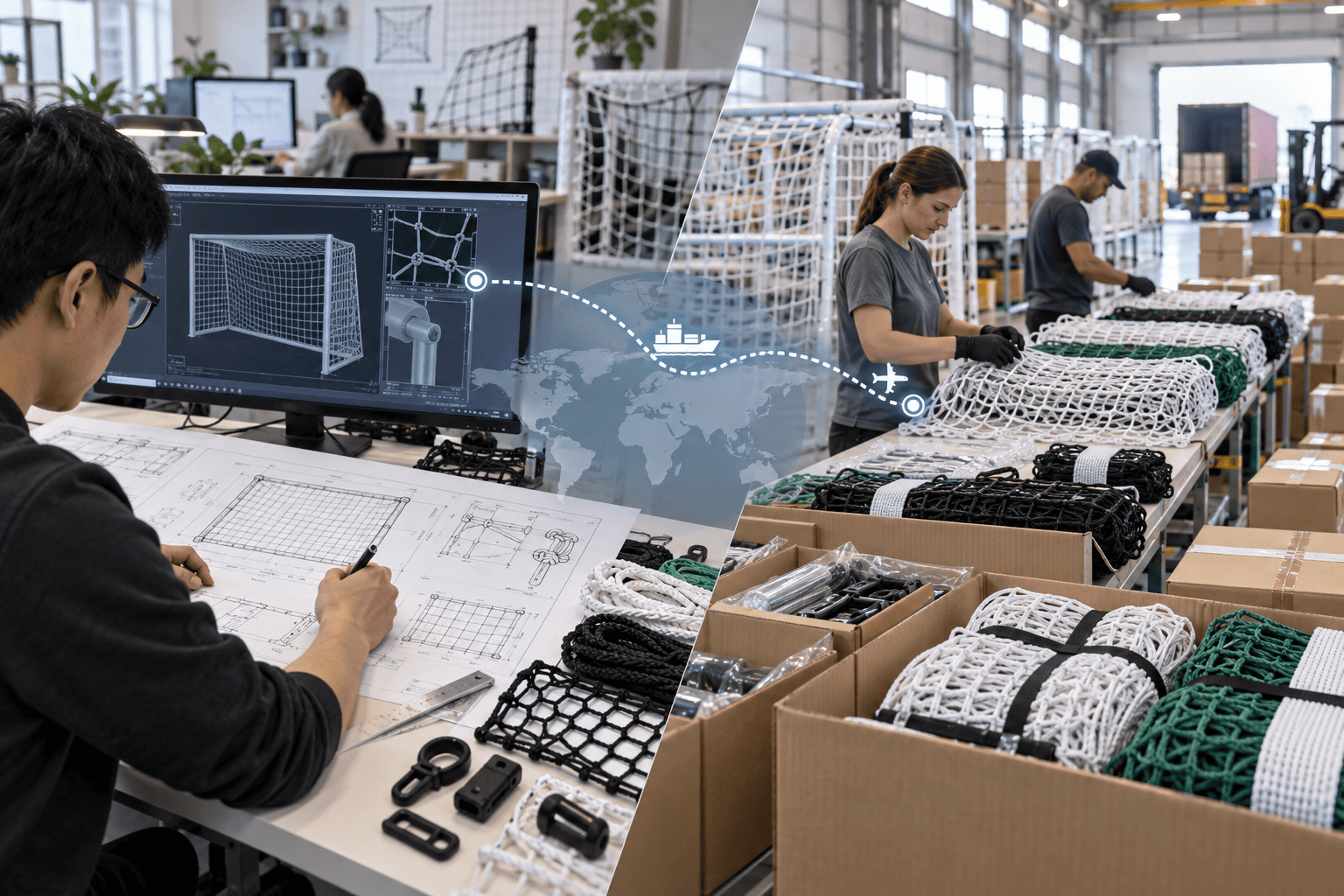
While only a small portion of buyers — 15–20% — might successfully diversify into complete offshore models by 2026, the dual-track system helps reduce tariff impact on lower-margin products. Buyers must evaluate these dynamics relative to their SKU mix and cost structure.
Buyer Takeaways: Managing supply chain shifts
- Balance production sources: For innovative designs, rely on China's established R&D and manufacturing expertise, avoiding delays in small-market assembly shifts.
- Evaluate assembly hubs: Engage with Indian and Vietnamese suppliers early to assess assembly capabilities and scale timelines.
- Re-negotiate costs: Factor intermediate transition costs into pricing strategies until broader shifts stabilize.
How is AI changing sports net product development?
AI and data analytics are transforming how B2B buyers approach product improvement.
Sports equipment businesses increasingly use AI tools to analyze Amazon reviews, extracting failure patterns and product flaws to develop refinements[^8]. This "data-driven closed loop" (e.g., negative reviews → factory improvement → new product → fewer failures) is accelerating product cycles in sports netting.

Factories capable of integrating these AI insights, such as ZRC's Review-Driven OEM/ODM model, will lead industry trends by innovating faster and solving pain points tied to durability, flexibility, and usage scenarios.
Buyer Takeaways: Incorporating AI processes
- Collaborate with factories: Seek suppliers with clear frameworks for iterative design revisions based on market data.
- Review analysis: Prioritize resolving failure rates in high-volume SKUs based on structured feedback.
- Expand testing protocols: Request field testing from factories to validate AI recommendations.
Where are the new growth markets for sports netting?
Three emerging growth segments are reshaping sports netting demand across niche applications.
The following high-growth markets are vital for buyers to track:
- School safety standards upgrades in the U.S., driving bulk replacement demand for safety nets as states tighten school sports regulations.
- Golf simulators and indoor training facilities, creating rapid demand for indoor-specific nets, with growth rates of 25–30%[^9].
- Community youth sports programs, supported by increased U.S. government investments in youth facilities.
Though individually smaller, these niches exhibit strong year-on-year purchase patterns and stable institutional buyers, making them ideal for factories with scalable production capabilities.
Buyer Takeaways: Strategic positioning for new markets
- Focus on U.S. compliance: Develop SKUs for school safety nets meeting updated regional regulatory standards.
- Target indoor training: Collaborate with emerging golf simulator manufacturers to align net specifications.
- Monitor repeat purchase cycles: Maintain visibility into youth sports program procurement schedules for repeat orders.
Frequently Asked Questions
Is rPET cost-effective for sports net buyers?
rPET nets typically cost 15–25% more than traditional PE nets. However, they offer advantages through environmental differentiation and compliance with buyer sustainability mandates. Long-term savings may accrue from improved institutional partnerships.
How can factories leverage AI to improve sports net products?
Factories should integrate feedback loops analyzing Amazon reviews and complaints, targeting durability improvements. Buyers benefit by sourcing optimized products with fewer end-user failures.
Will China remain the largest supplier for sports nets in 2026?
Yes, China's dominance in sports net production will persist into 2026, accounting for 60–70% of capacity due to slower assembly site expansions in Vietnam and India.
Conclusion
Sports netting industry trends toward sustainability, data-driven innovation, and emerging markets offer clear opportunities for global buyers. By anticipating these shifts in 2026, B2B purchasers can strategically position themselves to align with growing demand and changing procurement environments. Success depends on incorporating eco-materials, AI-driven iterative design, and supply chain flexibility. For buyers looking to innovate while reducing risks, the time to act is now. Contact our team at ZRC to explore smarter, review-driven product iterations and early alignment with high-growth niches.
[^1]: "Sustainable Sports Equipment - Education Forum", https://education-forum.co.uk/briefing/sports-equipment-month-embedding-environmental-criteria-into-sports-procurement-in-schools-and-universities/. An educational or industry report could provide expert consensus on the critical factors for success in the sports equipment market. Evidence role: expert_consensus; source type: education. Supports: The importance of sustainability, market-specific opportunities, AI-driven design, and supply chain shifts for B2B buyers in the sports netting industry.. Scope note: The source may focus on broader sports equipment trends rather than sports netting specifically. [^2]: "Sports Equipment Market Size, Share | Industry Report, 2033", https://www.grandviewresearch.com/industry-analysis/sports-equipment-market. A market research report or industry analysis could confirm the valuation and growth projections for the global sports equipment market. Evidence role: statistic; source type: research. Supports: The valuation of the global sports equipment market in 2023 and its projected growth by 2026.. [^3]: "Sports Betting - Medill Spiegel Research Center", https://spiegel.medill.northwestern.edu/sports-betting/. A market analysis report could provide data on the growth rate of the sports netting industry relative to the overall sports goods market. Evidence role: statistic; source type: research. Supports: The annual growth rate of the sports netting industry and its comparison to the market average.. [^4]: "Youth sport: positive and negative impact on young athletes", https://pmc.ncbi.nlm.nih.gov/articles/PMC3871410/. A study or report on youth sports participation trends in Asia-Pacific could validate the claim about its impact on sports netting demand. Evidence role: statistic; source type: education. Supports: The increase in youth sports participation in Asia-Pacific and its influence on sports netting demand.. Scope note: The source may focus on youth sports participation broadly, not specifically on its impact on sports netting. [^5]: "Mapping of Sports Facilities - The Council of Europe", https://www.coe.int/en/web/sport/mapping-of-sports-facilities. A market report or industry news article could confirm the adoption of rPET-based nets with GRS certifications by European sports facilities and large buyers. Evidence role: general_support; source type: research. Supports: The trend of European sports facilities and large buyers like Decathlon requesting rPET-based nets with GRS certifications.. Scope note: The source may not specifically mention Decathlon or all European sports facilities. [^6]: "Sport Net", https://www.nettarp.com/sport-net. A market analysis or industry report could provide information on Chinese rPET net production and its challenges. Evidence role: general_support; source type: research. Supports: The production of rPET nets by Chinese suppliers and the associated challenges of limited capacity and higher costs.. Scope note: The source may not provide specific cost data or detailed capacity figures. [^7]: "Realising the Export Potential of India's Sports Equipment ...", https://www.niti.gov.in/node/2232. A market analysis or industry report could provide insights into the timeline for capacity-building in Vietnam and India for sports equipment manufacturing. Evidence role: general_support; source type: research. Supports: The timeline for capacity-building in Vietnam and India for sports equipment assembly.. Scope note: The source may provide general timelines for manufacturing capacity-building, not specific to sports equipment. [^8]: "How AI and Sports Analytics are Teaming Up to Transform the ...", https://cehd.gmu.edu/features/2025/08/25/how-ai-and-sports-analytics-are-teaming-up-to-transform-the-sports-industry/. A research paper or industry report could provide evidence of AI applications in analyzing customer reviews for product improvement in the sports equipment industry. Evidence role: mechanism; source type: research. Supports: The use of AI tools by sports equipment businesses to analyze customer reviews and improve product designs.. Scope note: The source may discuss AI applications in product development broadly, not exclusively for sports equipment. [^9]: "Golf Simulators Market Size, Share, Growth, 2034 - Straits Research", https://straitsresearch.com/report/golf-simulators-market. A market research report could provide data on the growth rate of demand for indoor-specific nets in the context of golf simulators and training facilities. Evidence role: statistic; source type: research. Supports: The growth rate of demand for indoor-specific nets driven by golf simulators and indoor training facilities..
Questions or Comments?
Share your thoughts below. For OEM/ODM inquiries, contact our factory team directly by email or WhatsApp.